

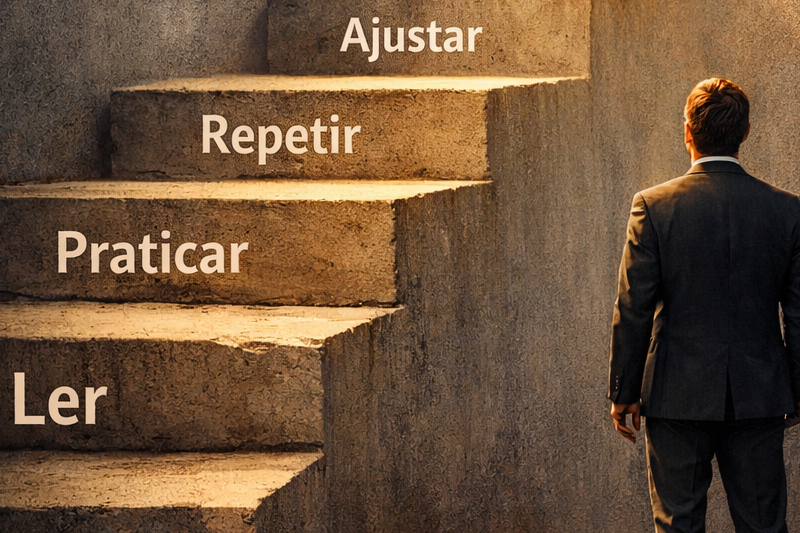
Leadership: Balancing How Much with How A reflection on sustainable leadership
Leadership: Balancing How Much with How
A reflection on sustainable leadership
Modern leadership talks a great deal about results: targets, numbers, performance and growth. We talk about how much. Yet we talk far less about how.
This imbalance can contribute to the strain and burnout seen among leaders, teams and organisations.
A focus on how much looks only at the end result: how much we sell, grow, produce or achieve. The problem is that results are consequences and are rarely something we can control directly.
A focus on how looks instead at behaviours, processes and specific actions that contribute to the result.
When leaders communicate only how much, they can create pressure without direction. Explaining how can provide clarity, focus and greater psychological safety.
A simple example illustrates the difference. Telling someone to achieve a particular number does not explain what they should do tomorrow morning. Defining simple, specific and repeatable actions turns an abstract target into a practical plan.
Ideas from organisational psychology support paying attention to this distinction. Process goals focus attention on actions people can control. Self-determination theory highlights the importance of competence and autonomy, while Carol Dweck’s work on growth mindset draws attention to learning and development. These perspectives offer useful ways to think about motivation and progress.
In practice, leading through how means breaking apparently overwhelming tasks into small steps directed towards a larger goal. Each step completed well creates opportunities for progress, learning and confidence, strengthening the conditions for better results.
Leadership that emphasises how retains ambition. It seeks to build more consistent and sustainable results while limiting unnecessary emotional strain and strengthening team commitment.
Perhaps the future of leadership lies in teaching better routes to success, as well as expecting better results.
Executive Summary
Used alone, a focus on how much can create pressure, anxiety and frustration. Concentrating exclusively on final outcomes overlooks the work needed to achieve them and can contribute to unhealthy strain.
A focus on how starts with specific, simple and controllable actions that support the objective. Breaking complex tasks into achievable steps can provide clarity, psychological safety and opportunities for continuous learning.
Leading through how does not reduce ambition. It helps build more sustainable, human and consistent performance over time.
Conclusion
In an increasingly demanding working environment, ambition is not necessarily the problem. How we communicate it matters.
Repeatedly pointing to how much can create tension without direction. Teaching how creates movement, progress and confidence. When people understand what to do today, tomorrow and next, results become more closely connected to work they can influence.
Effective leadership involves supporting people along the right path, step by step, as well as asking them to achieve more. This can be one practical contribution to healthier working conditions.
What does a focus on how much mean?
It means concentrating exclusively on final results, such as targets, numbers or quantitative objectives, without explaining the behaviours and processes needed to achieve them.
What does a focus on how mean?
It is an approach to leadership and communication centred on specific actions, processes and steps towards a goal. It prioritises behaviours people can put into practice over abstract outcomes.
Does focusing on how replace goal setting?
No. Goals remain important. The difference is the starting point: the goal sets the direction, while the day-to-day focus is on the process.
How might this approach help reduce work-related strain?
Reducing uncertainty and reliance on outcomes that are difficult to control can help people feel more competent, more autonomous and more able to make progress. It is one aspect of a supportive work environment.
Does this approach apply only to education?
No. It can be applied to leadership, sales, team management, parenting and other situations in which people work towards shared objectives.
Are there research perspectives that support this approach?
Self-determination theory, growth mindset research and work on process goals offer relevant perspectives on how competence, learning and controllable actions relate to motivation and performance.